発見 · Features
What makes Hakken different
A course built from a conversation, spoken aloud where it helps, and rewritten when something isn't landing. Three beats, in the order you meet them.
01
It starts with a conversation
No form, no level test. Hakken asks what you want, what you already know, and how much time you have — and each question builds on your answer.
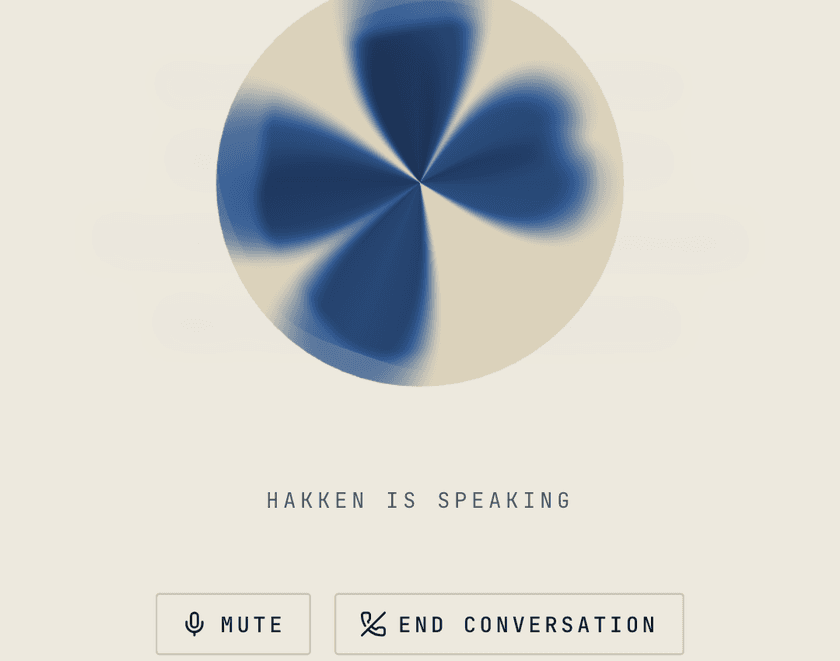
Voice interview
Rather just talk it through?
Switch to voice mid-interview and ramble the way you would to a colleague — the half-formed goal, the thing you tried that didn't stick, the trip in six weeks. Hakken makes sense of it and picks up right where you left off in text.
The limit
Voice is capped per day so the beta stays fast for everyone; the text interview is always open.
02
A course you can also listen to
Modules, lessons and checkpoints sized to your week and pitched at your level — with visuals, worked examples, quizzes and exercises. And where hearing is the point, it speaks.
Podcasts
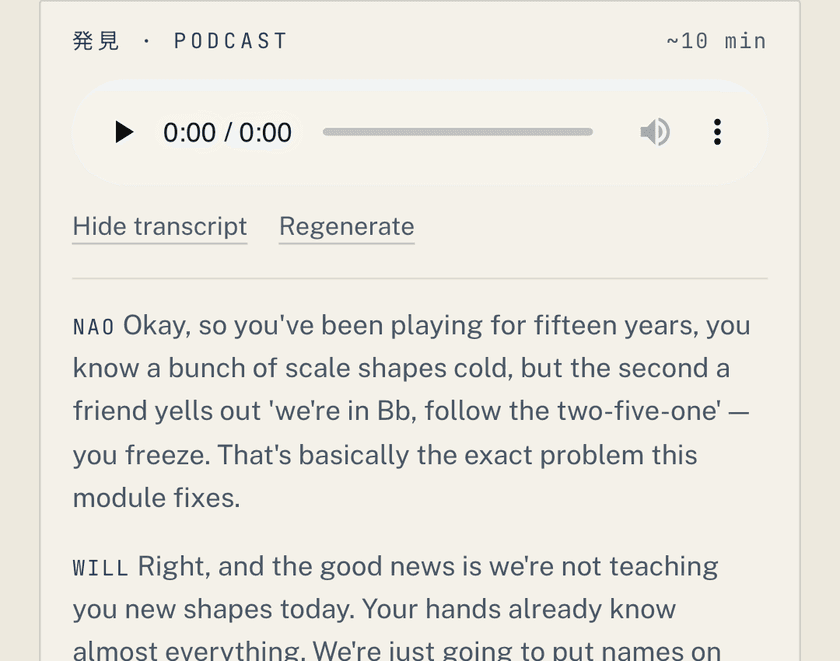
Every module, as a two-host episode
Ask for it and Hakken scripts a conversation between two hosts about your module — your goal, your examples, the things you said you found hard — and records it. Ten minutes for the commute, and it comes with you in the native app.
The limit
One episode per module, made when you ask for it — usually about a minute to record.
Lesson audio
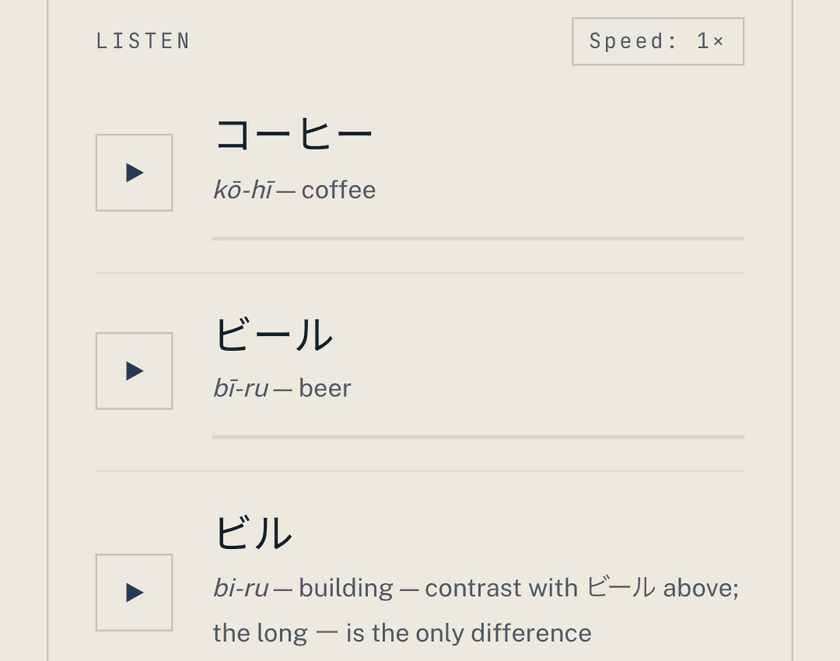
Lessons that speak where hearing matters
Grape names, Japanese phrases, the difference between two sounds that look the same on paper — a lesson that only prints them isn't teaching them. Where hearing is the point, the phrases are spoken aloud, with a slow-down chip for the hard ones.
The limit
Audio appears only where it earns its place; a lesson on regression stays silent.
03
It notices when something isn't landing
Most courses are finished the day they're published. This one keeps changing — when you stumble, and when you ask.
Review lessons
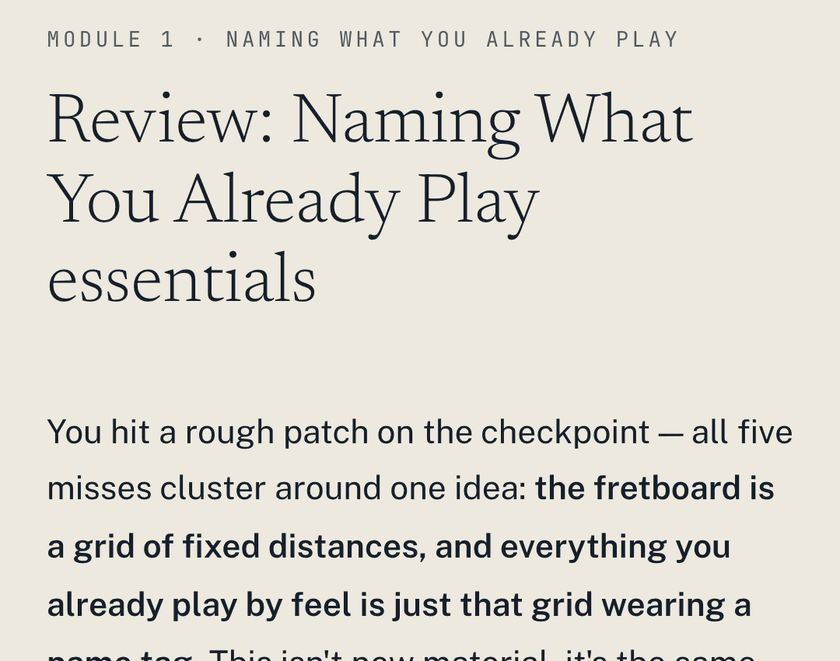
Miss a checkpoint? Get a lesson on exactly what you missed
Each module ends in a checkpoint. If you don't pass, Hakken looks at which questions you missed, finds the idea they cluster around, and writes a short review lesson on that — fresh examples, not the same paragraphs again — then lets you retake.
The limit
You can always skip ahead anyway; the review is offered, never forced.
Ask Hakken
Ask for a change and it rewrites the course
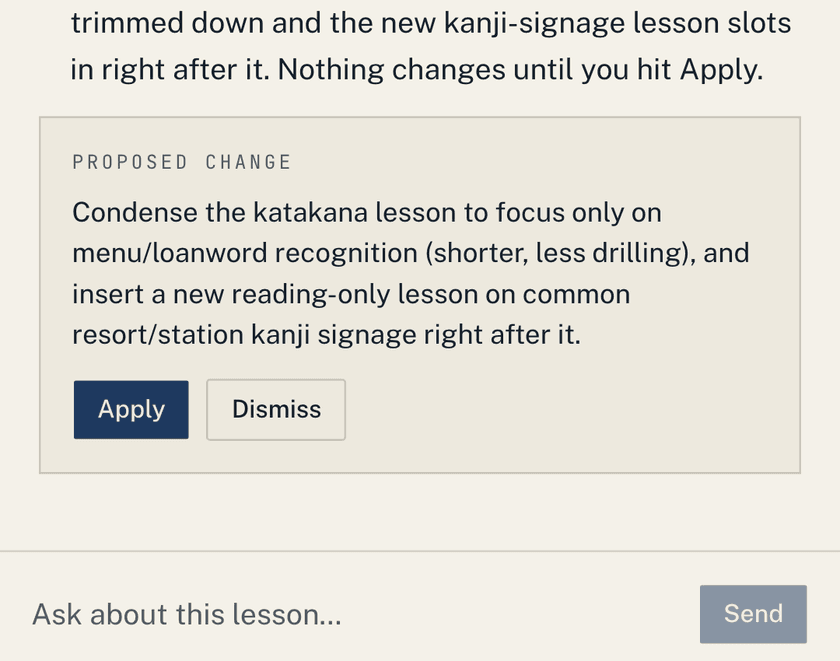
Too easy, too fast, missing the one thing you actually wanted? Ask from any lesson. Hakken answers, and when the fix is structural it proposes a change to the actual course — a new lesson, a gentler ramp, a module reordered — that you apply with one click.
The limit
It proposes; you confirm. Nothing in your course changes without your OK.
Voice tutor
Stuck mid-lesson? Just say so
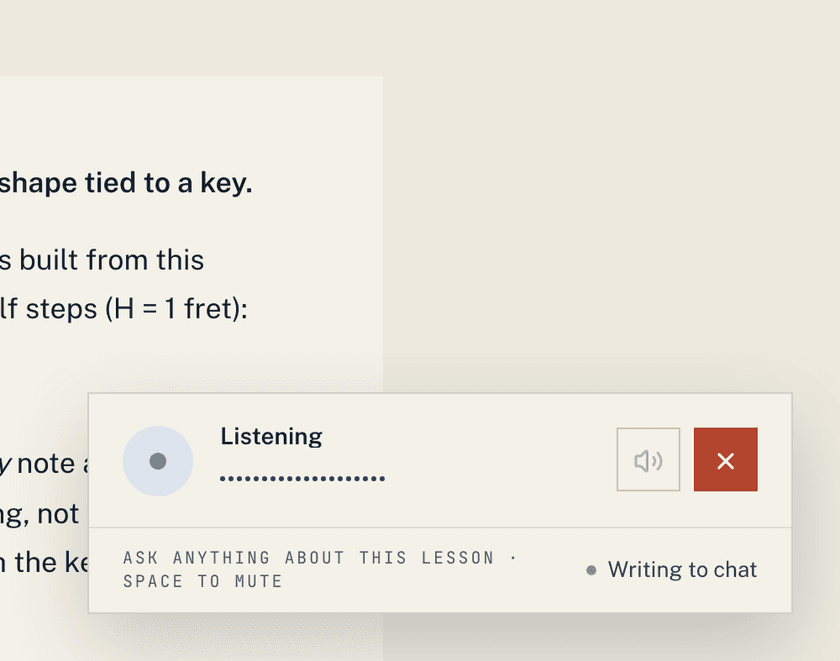
Tap the mic in the lesson tutor and talk it through while the lesson stays open — the tutor already knows what you're reading and where you are in the course. It answers back, follows your language if you switch, and everything you said lands in the same thread as your typed questions, so nothing is lost when you hang up.
The limit
Voice minutes are one daily budget shared with the voice interview — about twenty minutes a day. Typing is always open.
Also in every course
The rest of the box
Sized to your week
Two hours a week for six weeks is a different course from an hour on Sundays. The interview asks; the outline obeys.
Pitched at your level
What you already know gets skimmed or skipped. No three chapters of basics before anything new.
Images and diagrams
Generated for your course — a fretboard for the guitarist, a label anatomy for the wine list.
Quizzes and exercises
Check-yourself questions in every lesson, and exercises Hakken marks with feedback.
Videos, verified
Where a good video exists, the lesson links it — every one checked to actually exist and match.
In your pocket
Same account, same courses, your podcasts along for the ride — on Android and iPhone in closed beta.
See it built around your thing
Not sure it fits how you learn? See who it's for.